
Things to Do in Waukesha County & Milwaukee County This Weekend ☀️Wisconsin summer weekends do not mess around. The second we get a stretch of warm weather, everyone collectively decides we

Dated: September 12 2025
Views: 73
When disaster strikes, it can be confusing to sort out what happened, what the government is doing, and where to turn for help. That’s exactly how many of our friends, family, and clients felt after the devastating August 2025 Wisconsin storms.
While our Hupke Team members’ homes were spared, we’ve walked alongside people we care about who are still dealing with flooded basements, destroyed furnaces, ruined keepsakes, and the stress of rebuilding. We know firsthand how overwhelming the process can be — and that’s why we want to break it down clearly, step by step, so you know what FEMA’s major disaster declaration (DR-4892-WI) really means, what help is available, and how to access it.
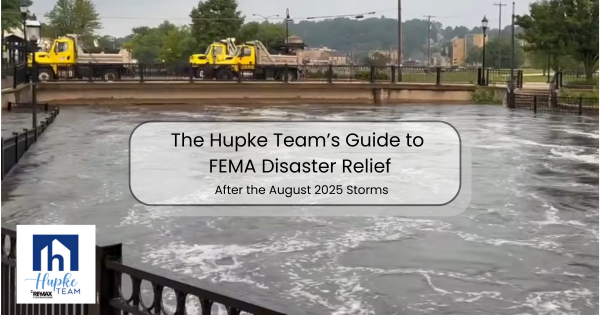
What it was: A natural disaster in southeastern Wisconsin between August 9 and 12, 2025.
What happened: Our region was hit by severe storms, straight-line winds, flooding, and mudslides, overwhelming local and state resources.
What it caused: Thousands of homes and businesses were flooded, public infrastructure was heavily damaged, and many families were displaced.
What it is: A formal action by the President, under the Stafford Act, that unlocks federal disaster aid. The governor of Wisconsin had to make a formal request to start the process.
What happened: On August 29, 2025, President Trump approved the declaration, officially named DR-4892-WI.
What it includes:
Individual Assistance – Aid for individuals and households with housing, repairs, and personal losses.
Public Assistance – Grants for state and local governments, and certain nonprofits, to help pay for emergency work and infrastructure repair.
Here’s where it can get confusing: FEMA doesn’t declare disasters — the President does. FEMA’s role is to manage and deliver the programs once the declaration is signed. That means:
Conducting damage assessments
Coordinating federal aid
Providing financial and technical assistance to households and communities
Milwaukee County: More than 1,800 homes damaged or destroyed; over $34 million in public infrastructure damage.
Waukesha County: At least $4.4 million in damage to public property, plus widespread basement flooding and utility outages.
Washington County: Significant flooding and infrastructure damage; totals are still being finalized.
Across the region, more than 18,000 damage reports were filed - making this one of the largest flood-related disasters in Wisconsin history.
Many residents were shocked when their insurance claims were denied after the storms. Here’s why:
Flooding isn’t covered. Standard homeowners’ policies exclude flood damage, groundwater seepage, and sewer backups unless you purchased special coverage.
Sewer and sump pump backups require add-ons. Without them, basement damage wasn’t covered.
Surface water exclusions. Rainwater or runoff entering a home from outside is typically not covered.
High deductibles and limits. Even approved claims often left families paying thousands out of pocket.
This is exactly why FEMA’s Individual Assistance program is so critical for Southeastern Wisconsin residents.
You may qualify if:
At least one member of your household is a U.S. citizen, non-citizen national, or qualified alien with a Social Security number.
Your primary residence is in Milwaukee, Washington, or Waukesha County.
You suffered serious disaster-related needs not covered by insurance or other programs.
The disaster caused damage that made your home unsafe or uninhabitable, or created significant expenses such as medical, dental, funeral, or transportation costs.
👉 Remember: File an insurance claim first. FEMA cannot duplicate benefits already covered by insurance, but it can help with unmet needs.
FEMA can help with costs your insurance doesn’t cover. Assistance may include:
Emergency needs – a small payment for food, shelter, gas, or medical supplies, plus cleaning and sanitizing your home
Home and property repairs – fixing your primary residence or replacing essentials like furnaces or appliances
Short-term accommodations – rental help if your home is unlivable
Personal property replacement – clothing, furniture, or appliances
Special circumstances – child care, medical or dental bills, transportation, lodging, moving expenses, or funeral costs
💡 Example: If your insurance denied coverage for a flooded basement, FEMA may help with cleanup, replacing your furnace, and even providing rental assistance while repairs are made.
Businesses in Milwaukee, Washington, and Waukesha Counties were also impacted by the August 2025 storms. While FEMA’s direct aid is only for individuals and households, small businesses and nonprofits may qualify for disaster loans through the U.S. Small Business Administration (SBA).
Business Physical Disaster Loans – May provide up to $2 million to repair or replace damaged real estate, equipment, or inventory not fully covered by insurance.
Economic Injury Disaster Loans (EIDL) – May offer up to $2 million to cover working capital needs such as payroll, rent, and accounts payable, even if the business did not suffer physical damage.
📌 Note: These programs are typically available following a federal disaster declaration like DR-4892-WI, but loan availability, amounts, and terms should be confirmed directly with SBA.
Visit the Small Business Loan Portal
Call the SBA Disaster Assistance Customer Service Center at 1-800-659-2955
Check with a FEMA Disaster Recovery Center once local locations are announced
In addition to SBA loans, there may also be state and regional recovery programs to help businesses bridge the gap:
WEDC Disaster Recovery Microloans (DRM):
These are interest-free microloans (up to $20,000) issued by regional partners to cover immediate recovery costs such as payroll, cleanup, or temporary relocation. Loan availability and terms vary by region, and repayment rules are set locally.
EDA Disaster Supplemental Grants:
The U.S. Economic Development Administration provides grants to state, local, and nonprofit entities to support long-term economic recovery projects. While businesses cannot apply directly, these funds may help local governments and organizations create programs that benefit the business community.
Local Aid Efforts:
After past disasters, some Wisconsin communities and organizations, such as Wisconsin Business Development (WBD) Finance Corporation, have launched rapid-response loan funds or direct aid programs. Availability varies and depends on local resources.
📌 Note: These state and local programs are not automatic. Business owners should contact the Wisconsin Economic Development Corporation (WEDC) or their local economic development office for the most up-to-date options.
Applying can feel overwhelming, but preparation helps. Here’s what to do:
File Your Insurance Claim First
FEMA will need a copy of your settlement or denial letter.
Document Everything
Take photos and videos of the damage.
Save all receipts for cleanup, repairs, lodging, and disaster-related costs.
Keep detailed notes of what happened, when, and what you lost.
Gather Your Information
Social Security number (for you or a household member)
Home and mailing addresses
Phone number and email address
Bank account and routing number (direct deposit is the fastest way to receive payment)
Insurance details (home, renters, flood, vehicle, etc.)
Be Specific About Damage
Describe what happened (flooding, sewer backup, wind damage, etc.)
Note what caused it and list specific items lost.
💡 Tip: The more thorough you are, the smoother the process will be — FEMA uses this information to match you with the right type of assistance.
Online: Disasterassistance.gov
FEMA App: Available for Apple and Android devices
By Phone: Call 800-621-3362 (7 a.m.–11 p.m. ET, 7 days a week)
For Individuals: FEMA may request more documents or schedule a home inspection. You’ll receive a decision letter explaining approval, aid amount, how it must be used, and how to appeal. Payments are sent by direct deposit or mailed check.
For Businesses:
After submitting an SBA or WEDC application, remember to:
Report damage to 211 Wisconsin or your local emergency management office.
Gather financial records (tax returns, payroll, leases, insurance documents).
Document physical damage with photos, receipts, and repair estimates.
Stay in touch with SBA, WEDC, or local partners about your application status.
Whether you’re a homeowner repairing storm damage or a business owner trying to keep operations afloat, these programs exist to fill the gaps that insurance can’t. The key is to apply early, keep good records, and use the resources available.
At The Hupke Team, we know your home is more than a building — it’s your safe place. We weren’t immune to the pain these storms caused: many of our family, friends, and clients are still dealing with loss. That’s why we’re committed to sharing resources like this alongside our real estate expertise.
In 2024, we proudly helped 121 families, closed over $38 million in sales, and earned 100+ five-star Google reviews. Whether you’re rebuilding after this storm or planning your next move, you can trust us to be your local experts.
All information in this post is accurate at the time of publication. For the most up-to-date details on aid programs, deadlines, and requirements, please visit the official websites noted above
Jennifer has been a trusted name in Southeastern Wisconsin real estate since 2003. With over two decades of experience, she brings a strategic, detail oriented approach to every transaction, whether i....
Things to Do in Waukesha County & Milwaukee County This Weekend ☀️Wisconsin summer weekends do not mess around. The second we get a stretch of warm weather, everyone collectively decides we
Buying a Home With a Pool in Wisconsin - Dreamy or Maintenance Monster?There is something about seeing a pool in a backyard that makes buyers immediately picture summer differently. Suddenly it is
Memorial Day Weekend in Waukesha County and Milwaukee County!Memorial Day weekend in Southeastern Wisconsin is one of those weekends that feels like the unofficial start of summer, but it also comes
Best Mini Golf Spots in Waukesha County and Milwaukee County ⛳Looking for a fun way to get out of the house without committing to a full-day adventure? Mini golf is one of those easy local
 Metro MLS - Milwaukee Data provided by Metro MLS. All information deemed reliable but not guaranteed. All properties are subject to prior sale, change or withdrawal. Neither listing broker(s) or information provider(s) shall be responsible for any typographical errors, misinformation, misprints and shall be held totally harmless. IDX information is provided exclusively for consumers personal, non-commercial use and that it may not be used for any purpose other than to identify prospective properties consumers may be interested in purchasing. The data relating to real estate for sale on this website comes in part from the Internet Data Exchange program of the Multiple Listing Service. Information is supplied by seller and other third parties and has not been verified. Real estate listings held by brokerage firms other than Jennifer Hupke Team may be marked with the Internet Data Exchange logo and detailed information about those properties will include the name of the listing broker(s) when required by the MLS. Copyright ©2026 - Multiple Listing Service, Inc. - All rights reserved.
Last Updated: September 23, 2026 8:05 AM UTC
Metro MLS - Milwaukee Data provided by Metro MLS. All information deemed reliable but not guaranteed. All properties are subject to prior sale, change or withdrawal. Neither listing broker(s) or information provider(s) shall be responsible for any typographical errors, misinformation, misprints and shall be held totally harmless. IDX information is provided exclusively for consumers personal, non-commercial use and that it may not be used for any purpose other than to identify prospective properties consumers may be interested in purchasing. The data relating to real estate for sale on this website comes in part from the Internet Data Exchange program of the Multiple Listing Service. Information is supplied by seller and other third parties and has not been verified. Real estate listings held by brokerage firms other than Jennifer Hupke Team may be marked with the Internet Data Exchange logo and detailed information about those properties will include the name of the listing broker(s) when required by the MLS. Copyright ©2026 - Multiple Listing Service, Inc. - All rights reserved.
Last Updated: September 23, 2026 8:05 AM UTC
